Types of concert AV production: a planner’s guide
Date added: 9/07/2026
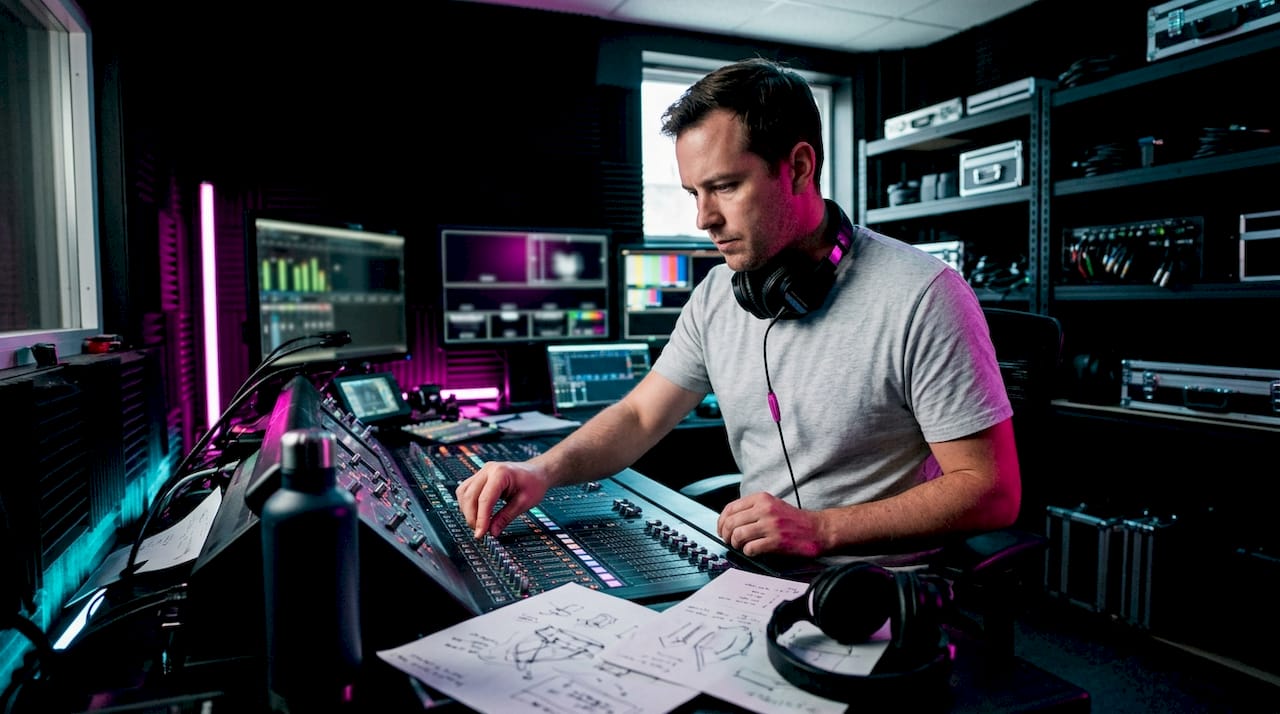
Concert AV production is the combination of audio, video, and lighting technology deployed at live events to deliver an immersive audience experience. The industry term for this discipline is AVL production, covering audio, video, and lighting as three interdependent systems. Getting the balance right across all three determines whether an event is memorable or forgettable. The types of concert AV production you choose must match your audience size, venue conditions, and the atmosphere you want to create. Fireflyav works across live events, corporate productions, and cultural programming, and the principles that govern AV equipment selection apply consistently regardless of scale.
1. What are the primary types of audio production in concerts?
Audio production is the foundation of any concert. Without clear, well-distributed sound, every other element loses its impact. Concert audio production divides into three broad categories based on scale and technology.
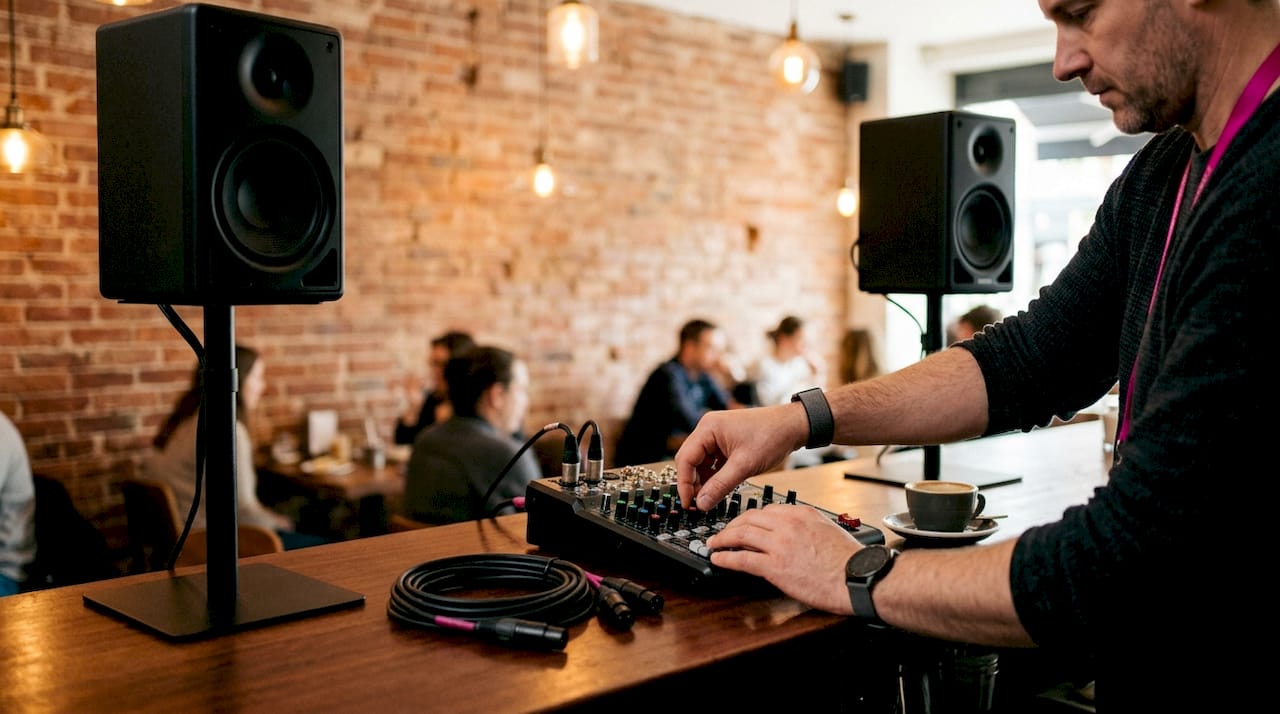
Small venue audio setups use powered full-range speakers mounted on stands or fixed to walls, paired with a compact digital mixing console. These setups suit audiences under 200 and require minimal crew. The mixing console acts as the command centre for all sound, with digital models offering channel recall and onboard effects that analogue desks cannot match. That recall capability matters enormously when you are running multiple acts through the same rig.
Line-array systems are the standard for mid-size and large concerts. A line-array is a column of speaker cabinets hung or stacked together, designed to project sound evenly across long distances. Large events require full line-array systems with delay towers positioned mid-venue to cover audiences beyond the main hang’s reach. A dedicated monitor engineer manages the on-stage mix separately from the front-of-house engineer, so performers hear themselves clearly while the audience receives a different, optimised mix.
Immersive audio systems represent the most advanced category. L-ISA Hyperreal Sound from L-Acoustics is one example, used on Lorde’s Ultrasound World Tour to create intimate presence even in large arenas. These systems place sound objects in three-dimensional space rather than delivering a flat stereo image. The result is a personal connection between performer and audience that standard left-right PA systems cannot replicate.
- Powered full-range speakers: best for venues under 200 capacity
- Line-array systems with delay towers: standard for 200 to 1,000+ audiences
- Immersive object-based audio: used in high-end touring and flagship events
- Wireless microphone systems: essential for freedom of movement on stage
- In-ear monitor systems: replace wedge monitors for cleaner stage sound
Pro Tip: Book a dedicated monitor engineer for any event above 300 attendees. Performers who cannot hear themselves make mistakes, and the audience always notices.
2. How do video production types vary for concert settings?
Video production at concerts serves two purposes: content display and audience sightlines. The technology you choose depends almost entirely on how much control you have over ambient light.
LED video walls
LED walls are standard for outdoor concerts and any indoor venue where you cannot fully black out the space. They produce high brightness output that remains visible in daylight or under house lighting. Modular LED panels clip together to form any screen size or shape, which gives production designers flexibility that fixed screens cannot offer. Pixel pitch determines the minimum comfortable viewing distance. Finer pitch panels, such as those with a 2.5mm or 3mm pitch, suit close-up viewing in smaller venues. Coarser pitch panels work for large audiences seated further from the stage. Fireflyav’s LED wall guide covers these distinctions in detail for planners making their first video production decision.
Projection systems
Projectors remain cost-effective for fully light-controlled indoor environments. A single high-lumen projector can cover a large screen area at a fraction of the cost of an equivalent LED wall. The trade-off is sensitivity to ambient light. Even modest light spill from stage fixtures can wash out a projected image. Projection mapping onto irregular surfaces, such as stage sets or architectural features, is a creative application that LED walls cannot easily replicate.
IMAG camera systems
Image magnification, known as IMAG, uses live camera feeds to show close-up footage of performers on the main screens. This is standard practice for any audience beyond roughly 500 people, where rear rows cannot see facial expressions or instrument detail. IMAG requires at least two camera operators, a vision mixer, and a dedicated video director calling shots in real time.
| Video type | Best environment | Key advantage |
|---|---|---|
| LED video wall | Outdoor or high ambient light | High brightness, modular sizing |
| Projection system | Fully light-controlled indoor | Cost-effective for large screen areas |
| IMAG camera system | Large audiences (500+) | Brings performers close to distant viewers |
3. What lighting production types enhance concert atmosphere?
Lighting is the visual language of a concert. It directs attention, creates mood, and transforms a bare stage into an environment. Concert lighting combines automated moving heads, LED pars, strobes, and effects fixtures, all controlled through DMX consoles.
Moving heads are motorised fixtures that pan, tilt, change colour, and project gobos (patterned light shapes) on command. They are the workhorse of modern concert lighting rigs. LED pars provide wash lighting in any colour without the heat or power draw of traditional tungsten pars. Strobes create high-impact flash effects timed to musical peaks. Followspots are manually operated spotlights that track performers across the stage, keeping the focal point clear for the audience.
DMX control systems connect every fixture to a lighting console, where a programmer or operator triggers cues in time with the music. The complexity of the console scales with the rig. A small club show might run on a compact 12-channel board. A festival stage uses a full-size console with hundreds of fixture profiles, timecoded sequences, and backup systems.
Atmospheric effects complete the picture. Haze machines distribute a fine particle mist that makes light beams visible in the air, turning a flat wash into a three-dimensional effect. Fog machines produce denser, lower-lying cloud effects. Both require careful management in enclosed venues to avoid triggering fire alarms.
Pro Tip: Always request haze-compatible fire alarm suppression from your venue before the production day. Discovering the alarm trips mid-show is a costly and avoidable problem.
4. How does event scale and venue environment influence AV production choices?
Live event AV production scales according to audience capacity across three tiers, and each tier demands a different technical approach.
- Intimate events (under 200 attendees): Powered speakers, a compact digital console, basic LED par wash, and a simple moving head rig cover most needs. Video is optional at this scale, though a single screen for content playback adds value for branded events.
- Mid-size events (200 to 1,000 attendees): Line-array systems replace powered speakers. A dedicated monitor engineer joins the crew. LED video walls or projection screens become necessary for audience sightlines. Lighting rigs expand to include automated moving heads and atmospheric effects.
- Large events (1,000+ attendees): Full line-array systems with delay towers, multi-camera IMAG, large-format LED walls, and complex automated lighting rigs are the baseline. Crew size increases significantly, with separate engineers for front-of-house audio, monitors, video, and lighting.
Venue environment shapes every decision. Ambient light control determines whether you use LED or projection for video. Ceiling height limits the size of lighting rigs and the hang positions available for line-array speakers. Power distribution is a critical infrastructure element that planners frequently underestimate. A large concert rig draws substantial electrical load, and power distribution mapping must happen before equipment arrives on site. Rigging safety, cable management, and crew communication systems are equally non-negotiable at scale.
Pro Tip: Build your AV specification from the event’s purpose outward, not from a generic equipment list. A corporate awards night and a rock concert may share the same venue but require completely different AVL approaches.
5. What emerging AV production trends are shaping concert experiences in 2026?
The most significant shift in concert AV production is the move from coverage-based audio to experience-based audio. Traditional PA design asks: “Can every seat hear the show?” Immersive audio design asks: “Can every seat feel the show?”
L-ISA Hyperreal Sound places individual sound objects across a wide speaker array rather than collapsing everything into a stereo image. The effect is a wider, more natural soundstage that maintains intimacy at arena scale. This technology is now appearing on mid-tier touring productions, not just flagship world tours.
Predictive modelling software like Soundvision allows audio engineers to model speaker coverage across a venue’s geometry before a single cable is run. The software identifies dead spots and coverage gaps in advance. On-site tuning remains essential because real-world acoustic conditions always differ from the model, but the gap between plan and reality narrows significantly.
“Immersive audio technology bridges the gap between large arena scale and intimate audience connection, redefining what concert sound design can achieve. The best productions in 2026 are not louder. They are more precise, more spatial, and more personal than anything a conventional PA system delivers.”
Lighting automation is advancing at a similar pace. Motorised rigging systems allow lighting positions to move during a show, creating dynamic overhead configurations that static trusses cannot achieve. Integrated communication systems, including digital intercom networks connecting audio, video, and lighting crews, reduce errors and improve show quality at every scale.
Key takeaways
The most effective concert AV production aligns audio, video, and lighting technology to audience size, venue conditions, and the specific goals of the event.
| Point | Details |
|---|---|
| Scale determines your rig | Intimate, mid-size, and large events each require a distinct AVL specification. |
| Ambient light drives video choice | Use LED walls outdoors or in bright spaces; use projectors only in fully light-controlled rooms. |
| Audio has three tiers | Powered speakers, line-array systems, and immersive object-based audio each suit different scales. |
| Infrastructure is non-negotiable | Power distribution, rigging safety, and crew communications define show quality as much as the headline equipment. |
| Build from purpose outward | Start with the event’s goals, then select the technology. Generic equipment lists produce generic results. |
What I have learned from watching planners get concert AV wrong
The most common mistake I see event planners make is treating AVL as a single line item rather than three interdependent disciplines. A planner will spend weeks on the lighting design, then book the cheapest available audio package and wonder why the show feels flat. Audio, video, and lighting must be planned together, with a single technical director overseeing the integration.
The second mistake is underestimating infrastructure. Power distribution, rigging, and crew communications rarely appear on a venue’s standard equipment list, yet they determine whether the headline gear performs as intended. I have seen technically impressive rigs underperform because the power supply was inadequate or the lighting and audio crews had no reliable way to communicate during the show.
My strongest advice is to involve your AV supplier at the venue walkthrough stage, not after the contract is signed. The 2026 standards for London venues make clear that early technical collaboration produces better outcomes and fewer surprises on the day. Emerging technologies like immersive audio and motorised rigging are worth exploring, but only when the fundamentals are already solid. Get the PA right before you book the object-based audio upgrade.
— Michael
Fireflyav’s concert AV production expertise
Fireflyav supplies AV equipment and technical support for live events, cultural productions, and corporate programmes across the UK. Whether you are planning an intimate branded showcase or a large-scale concert, the right equipment specification starts with understanding your venue, your audience, and your goals.
The AV equipment guide for planners on the Fireflyav website covers audio, video, and lighting technologies in practical detail, written specifically for event organisers rather than engineers. For a tailored equipment specification, you can submit your project details directly and the Fireflyav team will match the right kit to your brief.
FAQ
What are the three core types of concert AV production?
Concert AV production covers audio, video, and lighting, collectively known as AVL production. Each discipline requires separate planning, equipment, and crew.
When should I use an LED video wall instead of a projector?
LED walls suit outdoor events and venues with high ambient light. Projectors work best in fully light-controlled indoor spaces where brightness is not a limiting factor.
How do I choose the right audio system for my concert?
Match the system to your audience size. Events under 200 people suit powered speakers; audiences of 200 to 1,000 need a line-array system; events above 1,000 require full line-array rigs with delay towers and a dedicated monitor engineer.
What is IMAG and when is it necessary?
IMAG stands for image magnification. It uses live camera feeds to display close-up performer footage on screens, and it becomes necessary when audience members beyond roughly 500 seats cannot see the stage clearly.
What does DMX control mean in concert lighting?
DMX is the standard communication protocol that connects lighting fixtures to a control console. It allows a single operator to trigger colour changes, movement, and effects across an entire rig simultaneously.