Why London venues need AV: the 2026 guide
Date added: 9/07/2026

Audio visual technology is the single most important factor separating a forgettable London event from one that attendees talk about for months. The term “AV” covers everything from microphones and mixing desks to LED walls, streaming encoders, and automated lighting rigs. Understanding why London venues need AV goes well beyond ticking a technical checklist. The 2026 AV Trends Review published by Olympia Events and Aztec Event Services confirms that the industry has shifted decisively from treating AV as equipment to treating it as an experience enabler. For event planners and venue managers in London, that shift changes every decision from budget allocation to supplier selection.
Why London venues need AV: engagement and storytelling
AV technology is the primary tool for turning a room into a story. Without it, even the most architecturally impressive London venue is just a box with chairs. The move to immersive, content-led experiences means that audiences now arrive expecting to be drawn into a narrative, not simply presented with information.
LED screens and transparent displays give event designers the ability to layer visuals across a space, creating depth that flat projection cannot match. A product launch at a Southbank venue, for example, can use scenic LED panels behind a speaker to place them inside a branded world rather than in front of a corporate backdrop. That distinction matters because it changes how the audience feels about the brand, not just how they see it.
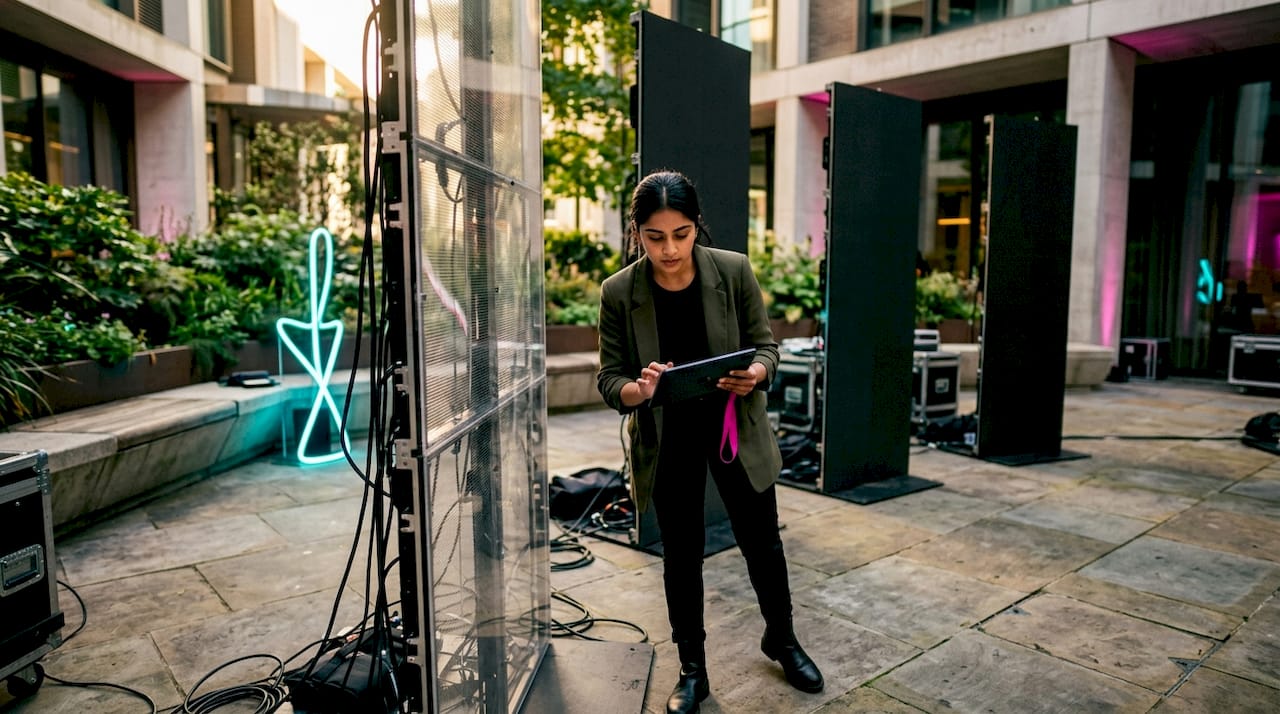
Personalised and accessible AV interactions have become core expectations, not optional extras. Multilingual captions, own-device experiences, and anonymous audience interaction tools increase participation across diverse attendee groups. A conference at ExCeL London serving an international audience, for instance, requires real-time captioning and language switching as standard. Venues that cannot support these features lose bookings to those that can.
Key benefits of AV for audience engagement include:
- Immersive visual storytelling through LED walls, projection mapping, and scenic layering
- Inclusive participation via multilingual captions and anonymous polling tools
- Branded atmosphere control using dynamic lighting and content-driven backdrops
- Real-time interaction through audience response systems and own-device platforms
Pro Tip: Brief your AV supplier on the event narrative before discussing equipment. A supplier who understands the story you are telling will specify kit that serves the content, not just the room.
Is AV a revenue driver or just a cost centre?
AV systems are silent staff members that work continuously to increase guest engagement and spending. That framing shifts the entire conversation for venue managers who treat AV as an overhead to be minimised.
Well-designed AV adapts to venue flow throughout an event. During a quiet period between conference sessions, interactive screens can display timely food and beverage promotions. Mood-setting music and visuals shift the energy of a room, encouraging guests to stay longer rather than drift to the lobby. Timely promotions on interactive screens and atmosphere management through AV directly influence secondary spend, which is where many London venues make their margin.
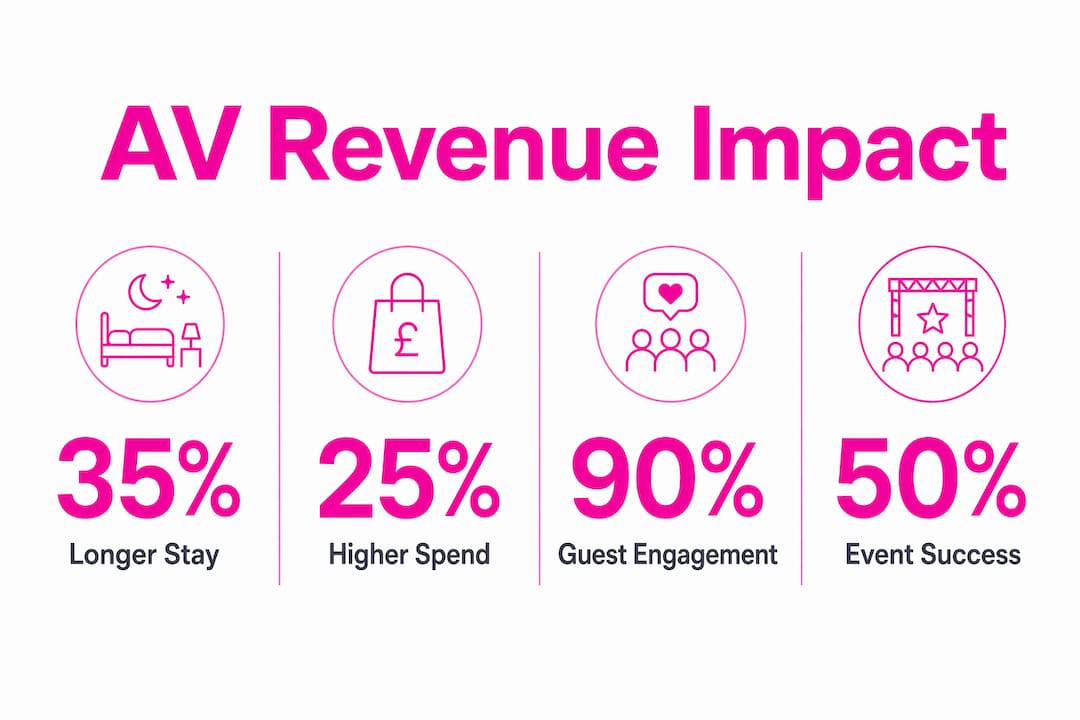
Automated AV controls also reduce manual workload for venue staff. A single operator using a control system like a digital mixing console can manage audio across multiple rooms simultaneously, cutting the labour cost of running parallel events. That operational efficiency compounds the financial case for investing in professional AV infrastructure.
The revenue-driving strategies available to London venues through AV include:
- Interactive screen promotions timed to slow periods in the event programme
- Atmosphere management through dynamic lighting and curated audio to influence dwell time
- Automated room control reducing the number of staff needed to run multi-room events
- Upsell opportunities through digital signage displaying premium packages or add-ons
- Hybrid event income by streaming content to remote delegates who pay a separate ticket price
Treating AV as a revenue-driving asset rather than a cost line transforms how venue managers justify AV budgets to ownership and finance teams. The conversation moves from “how much does this cost?” to “how much does this generate?”
What are the technical and logistical challenges of AV in London venues?
London venues present AV challenges that do not exist in purpose-built conference centres. Historic and heritage buildings, which make up a significant portion of London’s most sought-after event spaces, carry restrictions on rigging, cabling routes, and power distribution. A Grade II listed building in Mayfair may prohibit drilling, limit the weight hung from its ceiling, and restrict the cable runs available to an AV team.
In-house AV systems are often generic and fall short for complex events requiring redundancy, streaming, and architectural flexibility. A venue’s default projector and lapel microphone setup may work for a small board meeting. It will not work for a 500-person hybrid conference with simultaneous translation and live streaming to three time zones.
Venue AV teams managing multiple spaces may lack the focus that high-demand conferences require. When a technical issue arises mid-session, a stretched in-house technician covering three rooms cannot give your event the attention it needs. Audiences notice unresolved issues before anyone backstage does.
London’s logistics compound the technical picture. Narrow streets, loading bay restrictions, and congestion charge zones affect delivery schedules for AV equipment. A production truck arriving late because of a Soho street closure can delay an entire event build.
The steps that prevent these problems are:
- Commission a site visit before finalising the AV specification, checking power capacity, rigging points, and cable routes in person.
- Confirm delivery access including loading bay dimensions, permitted hours, and any road restrictions around the venue.
- Agree technical ownership in writing, clarifying which elements the venue covers and which the external AV supplier owns.
- Build redundancy into the specification so that a single equipment failure does not stop the event.
- Schedule a technical rehearsal on-site the day before, not the morning of, the event.
Early collaboration among venues, AV suppliers, and organisers is the single most effective way to prevent costly last-minute failures. A site visit costs a few hours. A failed live stream in front of 400 delegates costs far more.
Pro Tip: Ask your AV supplier for a power distribution plan before the event. Knowing exactly which circuits carry which loads prevent tripped breakers during a keynote.
How are London venues evolving into production studios?
London venues now function like mini-production studios, with clients expecting cinematic lighting, live streaming, and content capture as standard. This is not a niche demand from broadcast clients. It is the baseline expectation of corporate event buyers in 2026.
The “screen tourism” effect, driven by London’s cultural status as a filming location and creative hub, has raised the visual bar for events. Attendees who spend their leisure time consuming high-production content on streaming platforms arrive at events with calibrated expectations. A flat, poorly lit stage with a single projector reads as amateur against that reference point.
Professional AV systems designed around event content rather than venue rooms provide the redundancy and quality that hybrid and streamed events require. Equipment such as the Blackmagic Design ATEM Mini PRO gives event teams the ability to switch between camera feeds, graphics, and remote presenters in real time, matching broadcast-level production values at event scale.
| Capability | What clients expect | Why it matters |
|---|---|---|
| Live streaming | Multi-camera, broadcast-quality output | Remote delegates expect the same experience as in-room attendees |
| Cinematic lighting | Colour-accurate, programmable rigs | Supports content capture and creates atmosphere simultaneously |
| Content capture | Multi-angle recording for post-event use | Extends the value of the event beyond the day itself |
| Hybrid integration | Seamless switching between in-room and remote | Increases delegate reach without increasing venue capacity |
| Stage design | LED scenic elements and transparent displays | Elevates brand perception and visual storytelling |
Independent AV teams clarify technical ownership and improve real-time decision-making during events. When a camera feed drops or a remote presenter freezes, a dedicated technician with clear responsibility resolves it in seconds. A shared in-house team resolves it when they can.
The Horaizn AI Summit is one example of an event format that demands this level of production integration, combining live audience interaction, streamed content, and AI-driven experiences within a single event environment.
Key takeaways
AV technology is not optional for London venues. It is the infrastructure that determines whether an event succeeds or fails on every level from audience engagement to revenue generation.
| Point | Details |
|---|---|
| AV drives revenue | Well-designed AV increases guest dwell time, secondary spend, and hybrid ticket income. |
| Engagement requires experience design | LED walls, captioning, and audience interaction tools are now baseline client expectations. |
| In-house AV has limits | Generic venue systems rarely meet the redundancy and streaming demands of complex events. |
| London logistics need early planning | Site visits, power checks, and delivery confirmation prevent costly last-minute failures. |
| Venues are becoming production studios | Clients expect cinematic lighting, live streaming, and content capture as standard in 2026. |
What I have learned from watching AV transform London events
The most common mistake I see venue managers make is treating AV as the last line item to confirm, not the first. By the time the AV supplier arrives, the room layout is fixed, the power allocation is committed, and the rigging points are already spoken for. The AV team then spends half their build time solving problems that a 30-minute conversation three weeks earlier would have prevented entirely.
The shift from AV as equipment to AV as experience enabler is real, and it has happened faster than most venues have adapted. I have watched events at genuinely impressive London spaces fall flat because the AV was functional rather than considered. A working microphone and a bright projector are not AV production. They are the floor, not the ceiling.
The venues that are winning the best corporate and cultural events in London right now are the ones that have invested in relationships with professional AV suppliers before they need them. They know their power capacity. They know their rigging limits. They have a preferred supplier who understands the building. That preparation is what allows them to say yes to complex briefs that other venues have to turn away.
My recommendation is straightforward. Bring your AV supplier into the planning conversation at the same time as the caterer, not after the floor plan is signed off. The events that look effortless are the ones where the AV team had time to make them that way.
— Michael
Fireflyav: professional AV for London venues and events
Fireflyav specialises in supplying AV equipment and technical support for corporate conferences, cultural events, broadcast productions, and live events across the UK. Whether you are planning a multi-room conference, a hybrid summit, or a large-scale live event, Fireflyav provides the equipment and expertise to match your brief.
From conference microphone systems to vision mixers and cinematic lighting rigs, Fireflyav’s catalogue covers the full production chain. The team works with event planners and venue managers to specify kit that fits the content, the room, and the budget. Explore the full range of AV services and equipment or submit your project details through the Fireflyav product enquiry form to get a tailored recommendation for your next event.
FAQ
Why is AV technology essential for London venues?
AV technology is essential because it determines the quality of audience engagement, the viability of hybrid and streamed events, and the overall atmosphere of any event. Without professional AV, even well-designed venues cannot meet the production expectations of corporate and cultural clients in 2026.
What are the limits of in-house AV at London venues?
In-house AV systems are typically generic and lack the redundancy, streaming capability, and architectural flexibility that complex events require. Venue AV teams managing multiple spaces also cannot provide the dedicated technical focus that high-demand conferences need.
How does AV technology increase venue revenue?
AV systems increase revenue by encouraging guests to stay longer, supporting timely promotional content on interactive screens, enabling hybrid ticket sales through live streaming, and reducing staff costs through automated room controls.
What should event planners check before an AV build in London?
Event planners should confirm power capacity, rigging point weight limits, cable routing options, loading bay access, and delivery schedules before finalising any AV specification. A site visit with the AV supplier is the most reliable way to identify restrictions early.
What AV capabilities do London clients expect as standard in 2026?
Clients now expect multi-camera live streaming, programmable cinematic lighting, content capture for post-event use, and hybrid integration that gives remote delegates a comparable experience to in-room attendees.