AV site survey explained: a planner’s checklist
Date added: 5/08/2026

An AV site survey is a structured onsite visit in which a technician or AV consultant physically inspects a space before any equipment is specified, ordered, or installed. The surveyor measures room dimensions, records ceiling height, checks power locations, traces cable pathways, assesses acoustic surfaces, and photographs every critical view. That information then drives the equipment specification, the bill of materials, and the installation plan. According to AVIXA guidance, a properly executed survey prevents onsite surprises, avoids budget overruns, and confirms that the structural load capacity and infrastructure genuinely support the proposed system. A standard single-room visit typically runs 1–2 hours, though larger or more complex spaces take longer. AVIXA, the global AV industry body, offers formal training and course material on site surveys to standardise how professionals conduct and document them.
Key takeaways
A properly conducted AV site survey is the single most effective way to prevent change orders, mounting failures, and budget overruns on any AV installation or event production project.
| Point | Details |
|---|---|
| Definition and timing | An AV site survey is a structured onsite inspection; a standard single room takes 1–2 hours. |
| Biggest risks avoided | Prevents change orders, wrong equipment, mounting failures, poor intelligibility, and network incompatibilities. |
| What to prepare | Provide floor plans, confirm access, and have facilities, IT, and end-user contacts available on the day. |
| Minimum deliverables | Expect annotated plans, labelled photos, a BOM with budget estimate, scope statement, and a risk register. |
| Fireflyav | Fireflyav delivers full survey reports including annotated plans, BOM, and risk register for UK corporate, eSports, and event projects. |
Table of Contents
- Why an AV site survey prevents costly problems
- What your AV site survey checklist should capture
- How the AV site survey process works, step by step
- How long does a survey take, and what does it cost in the UK?
- How to prepare your venue for an AV site survey
- What a good site-survey report should deliver
- Common pitfalls in AV site surveys and questions to ask your surveyor
- How Fireflyav conducts AV site surveys
- A practitioner’s note on what surveys actually reveal
- Fireflyav can handle your UK AV survey from first visit to final report
- Sources
Why an AV site survey prevents costly problems
The survey prevents hidden costs and installation failures. Without one, equipment gets ordered against assumptions rather than facts, and assumptions fail at the worst possible moment: on installation day, in front of a client.
Specific risks a survey catches before they become problems:
- Change orders caused by discovering the wrong cable route or insufficient power only after equipment arrives
- Wrong equipment specified because room dimensions or ceiling height were estimated rather than measured
- Mounting failures from untested structural fixings or inaccessible ceiling voids
- Poor speech intelligibility caused by reverberant surfaces or ambient noise that was never recorded
- Network incompatibilities where PoE budget, VLAN configuration, or security policies block AV devices
- Accessibility oversights where sightlines or screen heights fail UK disability access requirements
AVIXA’s guidance frames the survey as a risk-mitigation discipline: measurable environmental constraints must be recorded so equipment choices can be defended to the client and to regulatory stakeholders. Documenting ambient noise and lighting intensity, for example, justifies higher-spec audio or display choices and reduces later disputes.
Pro Tip: The survey is as much a soft-skills exercise as a technical one. Ask the facilities manager, the IT lead, and the end user separately how they expect to use the room. Their answers rarely match, and the gaps reveal requirements that never made it into the brief.

What your AV site survey checklist should capture
Capture room geometry, surface finishes, infrastructure, acoustics, lighting, network details, and photographic evidence. A free standardised template helps teams record these consistently across projects.
Room geometry and sightlines
- Floor dimensions (length, width, diagonal) and ceiling height at multiple points
- Sightline calculations from the furthest and most obstructed seats to the proposed screen position
- Seating layout and maximum occupancy
- Door positions, columns, and any fixed obstructions
Surface finishes and environment
- Wall, floor, and ceiling materials (hard plaster, carpet, glass, timber) that affect reverberation
- Window positions, glazing area, and direction of natural light
- Ambient light levels at different times of day
- Any planned refurbishment that could alter finishes
Acoustics and noise
- Ambient noise sources: HVAC ducts, adjacent rooms, external traffic
- Reverberant surfaces that will affect speech intelligibility
- Existing acoustic treatment or isolation measures
Power and infrastructure
- Consumer unit or distribution board location and available capacity
- Existing socket positions and proximity to proposed equipment locations
- UPS provision or requirement
- Cable pathways, conduits, trunking, and ceiling void accessibility
Structural and mounting
- Ceiling type (suspended, concrete, timber joist) and confirmed load capacity for projectors, screens, or speakers
- Wall construction and fixing permissions from the building owner or facilities team
- Access routes for large items (lifts, door widths, loading bay)
Network and IT
- Network port locations and switch capacity
- PoE availability and power budget
- VLAN structure and security policies
- Wi-Fi coverage and any wireless survey requirements (a wireless site survey can confirm coverage and capacity independently)
- IT contacts and approval process for new devices
Existing AV and control systems
- Installed equipment make, model, and age
- Control system type and any integration requirements
- Cabling already in place and its condition
Compliance and accessibility
- UK Building Regulations Part M requirements for accessible viewing positions
- BS 8300 guidance on hearing loop provision
- Fire-stopping requirements for any new cable penetrations
- Health and safety requirements for working at height
Photograph every critical view with a scale reference. Surveyors should document more than they think necessary: photos, annotated sketches, and a versioned shared folder prevent disputes and rework later.
How the AV site survey process works, step by step
The process runs in three phases: preparation before the visit, structured capture onsite, and a written report with recommendations delivered afterwards. Survey findings form the foundation for AV design specifications, equipment recommendations, and project budgets.
Pre-survey preparation
- Obtain architect or venue floor plans (PDF preferred) and any reflected ceiling plans
- Confirm site access times, parking, and any PPE or induction requirements
- Identify and brief key stakeholders: facilities manager, IT lead, and end user
- Agree the scope: number of rooms, systems to be surveyed, and any specialist tests required
- Prepare the checklist template and a shared folder for photos and documents
Onsite capture
- Walk the space with the facilities contact before measuring anything — note anything unexpected
- Measure room dimensions with a laser distance metre; record ceiling heights at multiple points
- Photograph every wall elevation, the ceiling, the floor, and all infrastructure access points with a scale reference
- Test network ports (ping, PoE negotiation), check socket positions, and confirm cable-void access
- Record ambient noise levels and note HVAC, plant, or external noise sources
- Confirm structural fixing points and obtain written permission or a structural note for heavy items
- Interview the end user about how the room will actually be used day to day
Post-survey deliverables
- Annotated floor plans with dimensions, sightlines, and proposed equipment positions
- Labelled photo set with scale references, uploaded to a versioned shared folder
- Cable-route sketches showing proposed pathways and any access constraints
- Equipment recommendations with rationale tied to the survey findings
- Bill of materials (BOM) with budget estimate
- Scope statement listing what is included and what is explicitly excluded
- Risk register noting access issues, structural queries, or items requiring specialist input
The BOM and installation plan cannot be finalised without the survey data. Skipping the survey and working from a phone call or a rough sketch is the single most common cause of change orders on AV projects.
How long does a survey take, and what does it cost in the UK?
A standard single-room survey runs 1–2 hours onsite. What extends that time is complexity: a large auditorium with multiple speaker zones, a multi-room rollout, or a space requiring acoustic measurement will take considerably longer.
Factors that affect survey duration:
- Number of rooms or zones
- Accessibility of ceiling voids and cable routes
- Whether specialist tests (acoustic analysis, structural load assessment) are needed
- Distance from the AV company’s base and travel time
Common UK fee models:
- Flat fee per room: straightforward for standard meeting rooms or small event spaces
- Day rate: typical for larger sites or multi-room surveys; UK AV day rates for technical staff generally range from £350 to £650 depending on seniority and location
- Free with deposit: some companies absorb the survey cost against a confirmed project order
- Travel and reporting time billed separately: common when the site is outside the surveyor’s normal area
These are illustrative ranges only, not guaranteed prices. Fees vary by region, project complexity, and the number of deliverables required. Specialist tests such as acoustic analysis or structural load assessment carry additional costs and may require a separate contractor.
How to prepare your venue for an AV site survey
Provide floor plans, confirm access, and have the right people available. A well-prepared site visit takes half the time of a poorly prepared one.
Client and venue checklist before the surveyor arrives:
- Architect or venue floor plans in PDF format, including reflected ceiling plans if available
- Confirmed access times and any building induction or PPE requirements
- Name and mobile number of the onsite contact who can open locked rooms and ceiling voids
- A written list of intended room uses and expected occupancy numbers
- Login credentials or documentation for any existing AV or control systems
- IT contact details and a summary of network policies (VLANs, security, PoE availability)
- Written permission from the building owner or landlord for drilling and cable installation
- Health and safety documentation including any working-at-height restrictions
Have your facilities manager, IT lead, and an end user available for at least part of the visit. The surveyor will have questions that only those people can answer quickly. Delaying those answers means a follow-up visit, which costs everyone time.
What a good site-survey report should deliver
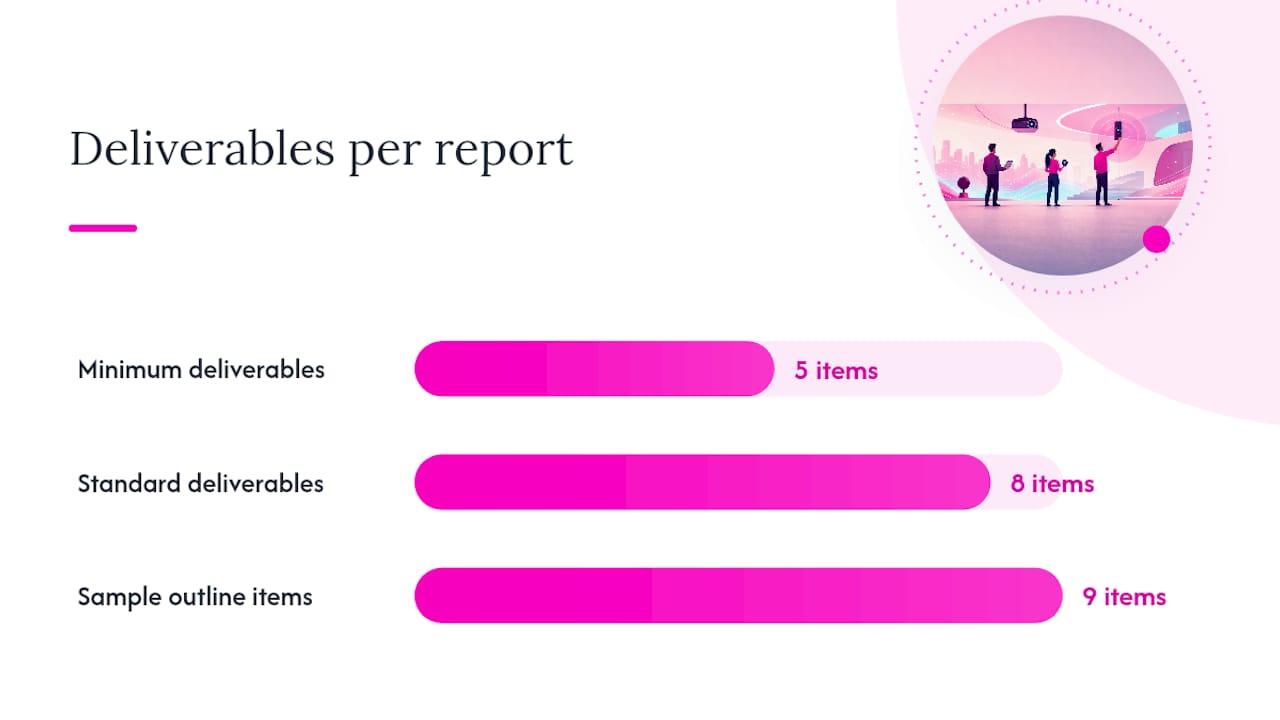
The minimum credible deliverables are annotated plans, labelled photos, an equipment list with rationale, a scope statement, and a budget estimate. A report that lacks any of these is incomplete.
Standard deliverables to expect:
- Annotated floor plans with room dimensions, sightlines, and proposed equipment positions marked
- Labelled photo set with scale references for every critical view
- Cable-route sketches showing proposed pathways and access constraints
- Equipment recommendations with written rationale tied to survey findings
- Bill of materials with a budget estimate (ranges are acceptable at this stage)
- Scope statement confirming what is included and what is explicitly excluded
- Risk register noting structural queries, access issues, or items needing specialist input
- Next-step actions and installation notes
Sample report outline to request when commissioning a survey:
- Project overview and survey date
- Site access notes and stakeholder contacts
- Room-by-room findings (dimensions, finishes, infrastructure, compliance notes)
- Annotated floor plans and photo appendix
- Proposed equipment list with rationale
- Cable-route sketches
- Budget estimate and scope statement
- Risk register and outstanding queries
- Recommended next steps
Uploading photos, annotated plans, and a versioned report to a shared folder prevents miscommunication and saves rework time during procurement and installation.
Common pitfalls in AV site surveys and questions to ask your surveyor
Most rework on AV projects traces back to an incomplete survey or an assumption that was never checked. The fix is rarely expensive at survey stage; it becomes expensive after equipment is ordered.
Red-flag pitfalls to watch for:
- Measuring only floor dimensions and ignoring ceiling height, void access, or sightlines
- Failing to record ambient noise or lighting, then discovering intelligibility or visibility problems at commissioning
- Assuming power or network is available at the proposed equipment location without physically confirming it
- Not obtaining written permission for drilling or cable installation before the project starts
- Failing to check access routes for large items (screens, speaker arrays, staging)
- Relying on memory or rough notes rather than photos and a completed checklist
Questions to ask your surveyor before and during the visit:
- Will you test network latency and confirm PoE power budget at each port?
- Which elements are explicitly excluded from the reported scope?
- How will you confirm structural load capacity for ceiling-mounted equipment?
- Will you measure ambient noise levels and record them in the report?
- How do you handle items that require specialist input (acoustics, structural engineering)?
- What format will the deliverables take, and how quickly after the visit?
Coordination with the client’s IT team is critical to avoid scope clashes. Confirm network ports, security policies, and mounting permissions during the visit, not afterwards. The same applies to electrical contractors and any building works running in parallel: a cable route that looks clear today may be blocked by a partition wall next month. For multi-venue events or phased rollouts, aligning survey schedules with the wider project programme is worth doing early.
How Fireflyav conducts AV site surveys
Fireflyav runs surveys that produce annotated plans, a recommended BOM, and a risk register as standard deliverables for every project.
The process follows a consistent structure:
- Pre-survey briefing: Fireflyav reviews any available floor plans, agrees the scope with the client, and identifies the key stakeholders who need to be present onsite
- Onsite capture: the survey team measures the space, photographs all critical views with scale references, tests network and power infrastructure, and interviews the facilities and IT contacts
- Technical checks: power availability, network port testing, ceiling void access, and structural fixing points are all confirmed during the visit rather than assumed
- Post-survey report: clients receive annotated floor plans, a labelled photo set, cable-route sketches, an equipment recommendation with rationale, a BOM with budget guidance, and a risk register
Fireflyav works across corporate conferences, eSports events, cultural productions, and broadcast projects, so the survey scope adapts to the event type. A corporate conference has different sightline and intelligibility requirements from an eSports arena or a broadcast studio. The survey captures what is specific to that use case, not a generic checklist applied uniformly.
For hybrid events where streaming and remote feeds are part of the brief, the survey also covers network bandwidth, latency, and encoder placement, because those requirements are invisible until someone looks for them.
Pro Tip: When requesting a survey, send Fireflyav your floor plans and a one-paragraph description of how the space will be used before the visit. That single step cuts onsite time and produces a sharper report.
A practitioner’s note on what surveys actually reveal
The measurement part of a survey is straightforward. What surprises most planners is how much the conversation reveals. Asking a room’s end users how they expect to use the space, separately from the facilities manager and the IT team, almost always surfaces requirements that never made it into the brief: the presenter who always stands to the left of the screen, the team that needs to hear remote participants clearly despite a noisy open-plan office next door, the venue that has never had a working hearing loop. None of those needs appear on a floor plan. They appear when someone asks the right questions and listens carefully to the answers.
Fireflyav can handle your UK AV survey from first visit to final report
For UK event planners and venue teams who need a survey done properly rather than done quickly, Fireflyav’s technical support and event production service covers the full process: pre-survey briefing, onsite capture, technical testing, and a written report with annotated plans, a BOM, and a risk register.

To request a survey, fill in the project details form with your venue address, the number of rooms, the intended use, and any floor plans you have. Fireflyav will confirm scope, agree access arrangements, and return a survey report with equipment recommendations. For planners who also need equipment guidance before the survey, that resource is a useful starting point for understanding what the survey findings will eventually specify.
Sources
A short list of reputable resources for templates, training, and practitioner guidance:
- How to Conduct a Proper Site Survey (and Avoid Problems Later) | AVIXA Xchange
- The Art of the Site Survey – rAVe PUBS
- Site Survey
- AV Site Survey & Inspection Template | Room Assessment Guide | Free Template
- How AV Consultants Conduct Site Surveys for Commercial AV Projects