What is event insurance AV? A UK planner’s guide
Date added: 11/07/2026

Event insurance AV is defined as a suite of specialist insurance policies that protect event organisers against financial losses and liabilities arising from audiovisual equipment and associated event risks. The term “AV event insurance” is not a single product. It is the industry shorthand for combining coverages such as General Liability, Inland Marine, and Event Cancellation Insurance into a package tailored to events where AV equipment plays a central role. Standard event liability policies typically start with a £1 million per-occurrence limit and a £2 million aggregate limit, satisfying the requirements of the vast majority of UK venues. Fireflyav works with event organisers across the UK who rely on this type of coverage to protect costly AV equipment and the events built around it.
What is event insurance AV and what does it actually cover?
Event insurance AV is best understood as a bundle of specialist policies, not a single one-size-fits-all product. Insurance experts confirm that it acts as a financial safety net against catastrophic mishaps, combining liability, property, cancellation, and liquor liability coverage tailored to the specific risks of each event. That distinction matters because planners who assume one policy covers everything often discover gaps at the worst possible moment.
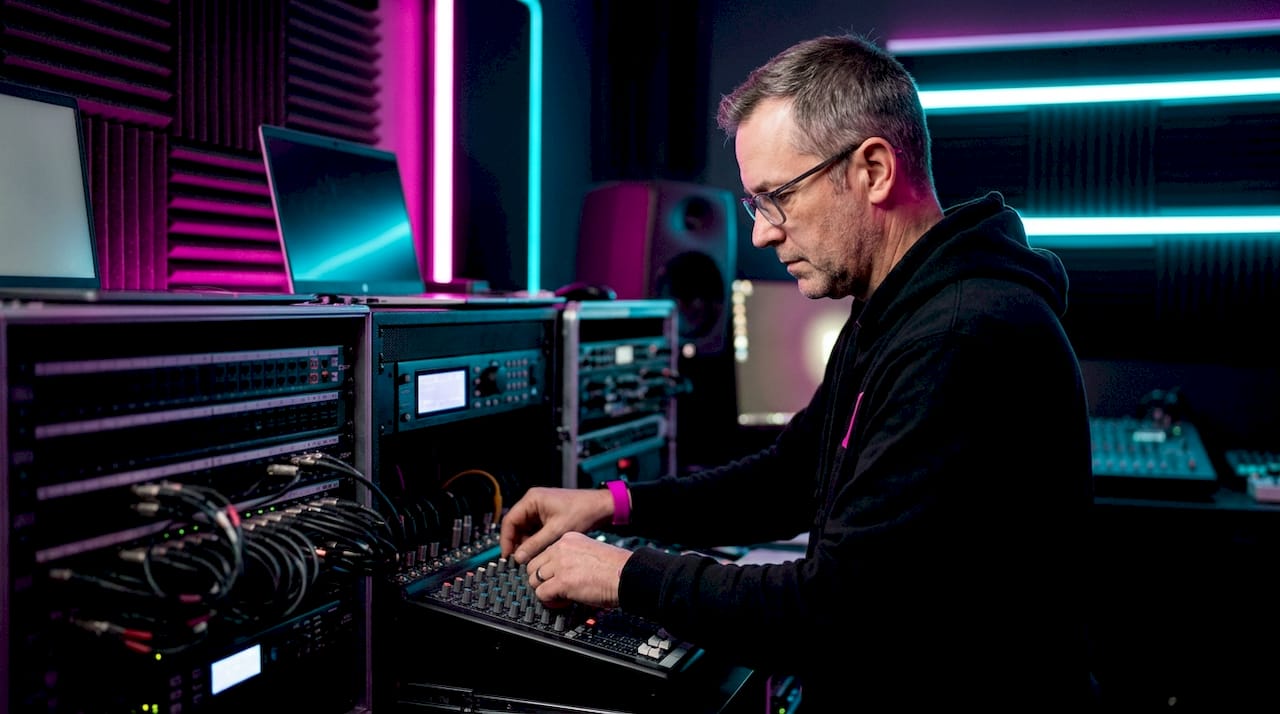
The audiovisual dimension adds a layer of complexity that standard event insurance does not always address. Expensive mixing desks, LED screens, projection systems, and wireless microphone rigs represent significant capital. A single incident involving theft, transit damage, or a third-party injury caused by a poorly rigged speaker can generate losses that run into tens of thousands of pounds. Proper AV event insurance accounts for all of these scenarios.
What types of event insurance cover AV equipment and associated risks?
Professional event planners require up to eight distinct coverages, and four of these are directly relevant to AV-focused events. Understanding what each one does prevents dangerous gaps in protection.
-
General Liability (GL). GL covers third-party bodily injury and property damage at your event. If a guest trips over a cable run by your AV crew, GL pays the resulting claim. It is the foundational coverage that virtually every UK venue demands before granting access.
-
Inland Marine insurance. Despite its name, this coverage has nothing to do with water. Inland Marine specifically protects expensive AV, lighting, stage, and decorative equipment during transportation and onsite setup from theft, damage, or vandalism. It is the coverage most often overlooked by planners and the one most relevant to protecting high-value AV gear.
-
Event Cancellation Insurance. General Liability does not cover your own financial losses if an event is cancelled or postponed. Event Cancellation Insurance is purchased per event and reimburses lost deposits, vendor fees, and client refunds when a covered reason forces cancellation. For events with large AV production budgets, this protection is critical.
-
Liquor Liability. If alcohol is served, Liquor Liability must be added as a separate policy. Standard GL excludes alcohol-related claims entirely. Many UK venues make this mandatory regardless of whether the organiser or a licensed caterer serves the drinks.
These four coverages complement each other and are frequently bundled into annual packages for professional planners. A planner running multiple corporate conferences per year, for example, benefits from an annual GL policy combined with per-event cancellation coverage and a standing Inland Marine policy covering their AV inventory throughout the year.
How much does AV event insurance cost?
The cost of event insurance varies considerably depending on the scale, duration, and complexity of the event. The table below gives a practical overview of typical premium ranges.
| Coverage type | Typical cost range | What drives the price |
|---|---|---|
| General Liability (per day) | £60–£190 equivalent | Attendee numbers, venue type, liquor provision |
| Event Cancellation Insurance | 1–3% of insured event budget | Budget size, covered perils, event complexity |
| Inland Marine (annual) | Included in annual packages or quoted separately | Value of AV inventory, transit frequency |
| Annual package (small planner) | £1,200–£3,600 equivalent | Number of events, coverage breadth, add-ons |
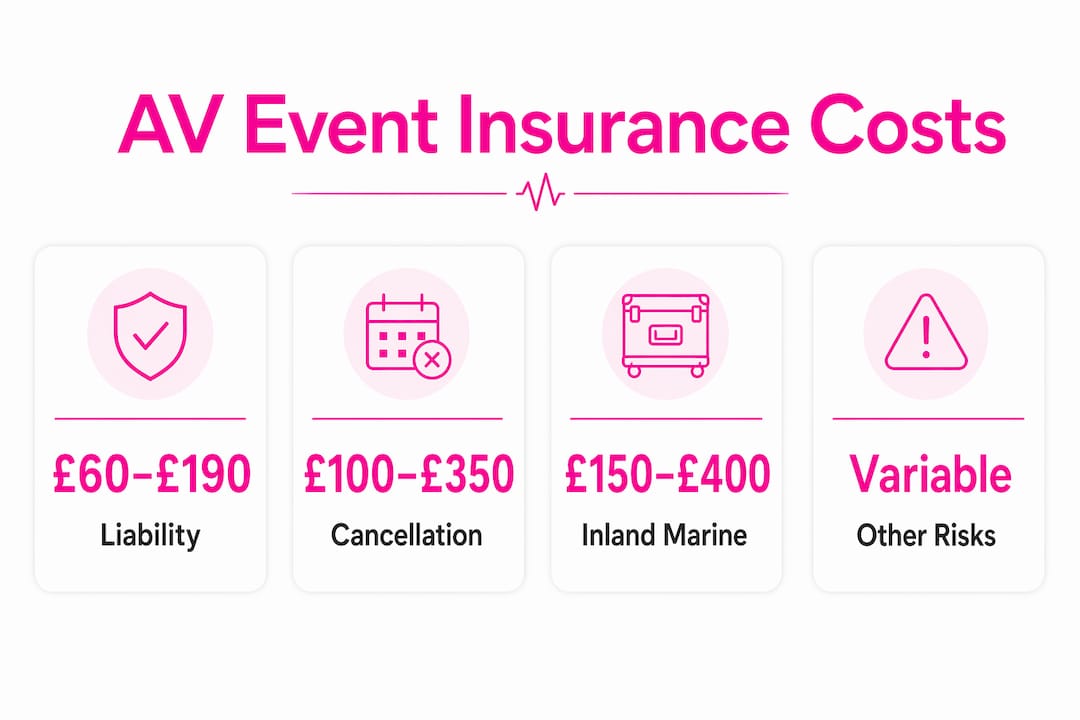
One-day event liability insurance costs typically range from £60 to £190 for events up to 500 attendees, with cancellation insurance adding approximately 1–3% of the event budget on top. That means a £50,000 AV production budget could carry a cancellation premium of £500–£1,500 alone.
Several factors push premiums higher. Outdoor venues carry greater weather and ground-condition risk. Complex AV setups with rigging, large screens, or live broadcast equipment increase the probability of equipment damage and third-party injury. Alcohol service adds Liquor Liability costs. Events running over multiple days accumulate more exposure than a single afternoon conference.
Pro Tip: Request itemised quotes for each coverage type rather than accepting a bundled price without breakdown. Knowing the individual cost of Inland Marine versus GL helps you assess whether the AV equipment value justifies the premium and where to adjust limits.
What are the insurance requirements for AV events in the UK?
UK venues impose specific insurance requirements, and failing to meet them can result in a booking being cancelled on the day. Most venues require liability insurance with a minimum of £1 million per-occurrence and £2 million aggregate limits, along with an additional insured clause naming the venue on the policy. These are non-negotiable at the majority of professional event spaces.
The practical steps for meeting these requirements follow a clear sequence.
-
Confirm venue requirements in writing. Request the venue’s insurance specification document before purchasing any policy. Requirements vary, and some venues demand higher limits for large-scale AV productions.
-
Purchase insurance 30–60 days before the event. Certificates of Insurance should be prepared 30–60 days prior to the event to allow time for review and any amendments. Leaving this to the final week creates unnecessary risk.
-
Verify vendor insurance. Vendors and entertainers must provide their own Certificates of Insurance. Event planners who skip this step risk bearing liability for accidents caused by hired AV crews or equipment suppliers.
-
Check for coverage gaps. A common and costly mistake is assuming the venue’s own policy covers the organiser or their vendors. It does not. The venue policy protects the venue, not you.
-
Match coverage to event specifics. An outdoor festival with a complex corporate AV setup requires different limits and add-ons than an indoor conference. Outdoor events need weather-related cancellation clauses; events with rigging need higher GL limits.
-
Work with a broker experienced in event AV. A generalist insurance broker may not recognise the specific risks of AV production. Brokers who specialise in events understand Inland Marine, rigging liability, and the value of broadcast-grade equipment.
Pro Tip: Combine your annual GL policy with a per-event cancellation policy and a standing Inland Marine policy. This structure gives year-round protection for your AV inventory without paying for separate property coverage each time you run an event.
What risks does AV event insurance cover and what does it exclude?
AV event insurance covers a defined set of risks, and understanding the boundaries prevents expensive surprises.
What is typically covered:
- Theft, damage, and vandalism of AV equipment during transit, setup, and the live event itself
- Third-party bodily injury claims arising from AV equipment or its installation
- Property damage caused to a venue by AV rigging, cabling, or equipment failure
- Financial losses from event cancellation due to covered reasons such as extreme weather, venue closure, or key supplier failure
- Vendor failure that directly impacts AV arrangements, where the policy wording includes this as a covered peril
What is typically excluded:
- Wear and tear or gradual deterioration of AV equipment
- Damage caused by failure to maintain equipment properly
- Certain natural disasters, depending on specific policy wording
- Losses arising from events cancelled for reasons not listed as covered perils
- Cyber incidents affecting AV control systems, unless Cyber Insurance is added separately
Reading the policy exclusions is as important as reading the coverage. A planner who insures a £30,000 LED wall under a policy that excludes transit damage has no protection the moment that screen leaves the warehouse. Always confirm that Inland Marine coverage extends from the point of loading to the point of return, not just during the live event hours.
Deductibles also affect the real-world value of a policy. A low premium with a high deductible may leave you absorbing the first £2,000–£5,000 of any claim. For high-value AV equipment, a lower deductible is worth the additional premium.
Key takeaways
Event insurance AV requires a combination of General Liability, Inland Marine, Event Cancellation, and Liquor Liability policies to protect both AV equipment and associated event liabilities fully.
| Point | Details |
|---|---|
| AV insurance is a bundle | No single policy covers all AV event risks; combine GL, Inland Marine, and cancellation coverage. |
| Inland Marine is non-negotiable | It is the only coverage that protects AV equipment during transit, setup, and the live event. |
| Buy insurance 30–60 days early | This allows time for Certificate of Insurance issuance and venue review before the event date. |
| Verify vendor certificates | Always obtain Certificates of Insurance from AV suppliers to avoid bearing their liability. |
| Read exclusions carefully | Wear and tear, transit gaps, and uncovered cancellation reasons are the most common claim pitfalls. |
Why planners underestimate AV insurance risk
The most common mistake I see event planners make is treating General Liability as a complete solution. GL is the foundation, not the building. It covers what happens to other people. It does not cover what happens to your equipment, your budget, or your client’s deposit when something goes wrong.
Inland Marine coverage is the one that genuinely changes outcomes for AV-heavy events. I have spoken with planners who discovered, after a theft, that their GL policy offered nothing because the stolen gear belonged to them, not a third party. The equipment was gone, the event was cancelled, and there was no recovery. That is an avoidable situation.
The other habit worth building is treating vendor insurance verification as a standard checklist item, not an afterthought. If an AV supplier’s crew damages a venue ceiling during rigging and that supplier carries no insurance, the liability lands on the organiser. Asking for a Certificate of Insurance before any vendor sets foot on site is the simplest risk management step available.
Early engagement with a specialist broker also pays dividends. A broker who understands the value of a Sennheiser wireless system or a broadcast-grade switcher will write a policy that reflects actual replacement costs, not generic electronics values. Generic policies routinely undervalue AV inventory, which means underinsurance at the point of claim.
— Michael
How Fireflyav supports your AV event planning
Fireflyav supplies professional AV equipment and technical support for corporate conferences, live events, broadcast productions, and eSports across the UK. Working with a professional AV provider reduces the operational risks that drive insurance claims in the first place: equipment that is properly specified, correctly installed, and maintained to a professional standard is far less likely to generate a liability incident or a cancellation.
Fireflyav’s team understands the equipment values that underpin AV event insurance decisions. Whether you are planning a single conference or a full production calendar, getting the AV specification right from the start informs the coverage you need. Use the Fireflyav product form to outline your AV requirements and speak directly with the team about your next event.
FAQ
What is event insurance AV in simple terms?
Event insurance AV is a combination of insurance policies that protect event organisers against financial losses and liabilities related to audiovisual equipment and event operations. It typically includes General Liability, Inland Marine, and Event Cancellation Insurance.
Does General Liability cover AV equipment damage?
General Liability covers third-party injury and property damage but does not cover damage to or theft of your own AV equipment. Inland Marine insurance is required to protect owned or hired AV gear during transit and at the event.
How much does event insurance cost for a UK event?
One-day liability coverage typically costs the equivalent of £60–£190 for events up to 500 attendees, with Event Cancellation Insurance adding approximately 1–3% of the insured event budget on top.
When should I buy event insurance for an AV production?
Purchase event insurance 30–60 days before the event date. This allows sufficient time to issue Certificates of Insurance and satisfy venue requirements before the event.
Do I need to check my AV supplier’s insurance?
Yes. Vendors must carry their own insurance, and planners should obtain Certificates of Insurance from all AV suppliers before the event. Failure to do so risks the organiser bearing liability for supplier-caused accidents or damage.